 how-to
7 Steps to Notarize a Will at Home Legally
Last Updated: October 26, 2026
Quick Summary
To notarize a will at home legally, gather the unsigned will, valid photo ID for the testator and witnesses, and a self-proving affidavit page if your state allows one, then have the testator sign first in front of all witnesses and the notary. The notary verifies identity and completes the acknowledgment or jurat, notarizing the signatures on the certificate or affidavit rather than the will's contents. Everyone must stay in the room for the entire ceremony.
- A will does not need notarization to be legally valid in most states; witnesses usually carry the legal weight.
- Most states require two witnesses, and in many states a witness cannot be a beneficiary named in the will.
- The testator signs first in front of everyone, witnesses sign after, and the notary completes the certificate last.
- A self-proving affidavit lets a court accept the will during probate without calling witnesses to testify.
- Many states restrict or prohibit remote online notarization for wills, so confirm your state's position first.
Table of Contents
- What You'll Need Before the Notary Arrives
- Does a Will Need to Be Notarized to Be Valid?
- Will Witnesses and Notarization: Who Signs What
- Step-by-Step: Signing Your Will at Home
- Adding a Self-Proving Affidavit for a Will
- Booking a Mobile Notary for Wills at Your Home
- Common Mistakes That Sink a Home Will Signing
- Schedule Your In-Home Will Signing
- Frequently Asked Questions
What You'll Need Before the Notary Arrives
Learning how to notarize a will at home legally starts with one hard truth: if you notarize a will, a notary cannot make a bad will good. At David Booth Mobile Notary, we see families assume the notary stamp does the legal work. It doesn't. The notary confirms identity and witnesses a signature. Your state's signing rules do the rest.
Gather these items on a clear table before anyone arrives:
- The unsigned will, printed on paper, with every page intact
- Valid photo ID for the testator and each witness
- A self-proving affidavit page, if your state allows one
- A pen, not a pencil, for every signer
- The notary certificate language your state requires
Check the National Notary Association guidance on notarizing wills for the certificate wording a notary needs. Rules vary by state, so confirm your state's requirements before signing day.
Does a Will Need to Be Notarized to Be Valid?
No. A will does not need notarization to be legally valid in most states. Witnesses usually carry the legal weight. A notary adds proof, not permission.
That distinction matters. A self-proving affidavit is a sworn statement attached to the will. It lets a court accept the will during probate without calling witnesses to testify. LegalShield notes that notarization rules vary by state, and some states don't require a notary at all.
So why notarize? It saves your family a headache later. If you're weighing estate planning options, our guide on alternatives to bank notary services for estate planning covers where to find a qualified notary. And if you're unsure whether your document is a will or something else, read power of attorney vs living will first.
Will Witnesses and Notarization: Who Signs What
Witnesses and the notary play separate roles, and mixing them up sinks signings. Here's who does what:
- Testator: signs the will and must be aware of what they're signing
- Witnesses: watch the testator sign, then sign in each other's presence
- Notary: verifies identity and completes the notarial certificate
Most states require two witnesses. Some require three. Witness eligibility also varies: in many states, a witness cannot be a beneficiary named in the will. Check your state's rules before you invite anyone.
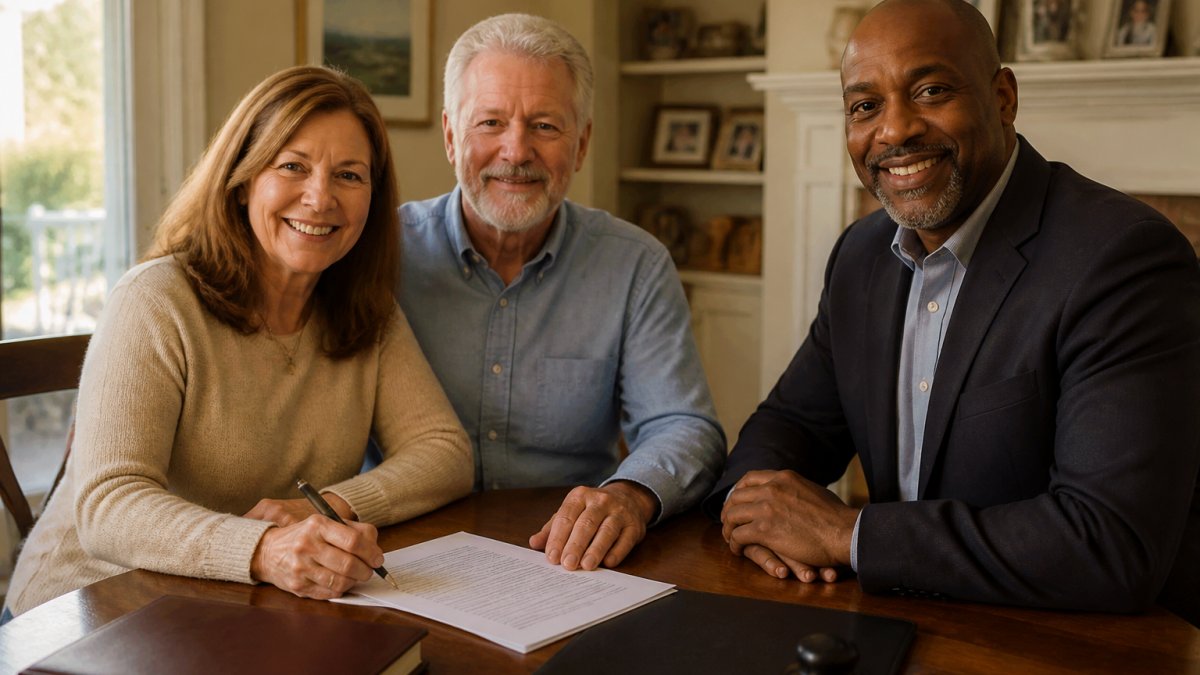
The signing order matters. The testator signs first, in front of everyone. Witnesses sign after. The notary then completes the acknowledgment or jurat. Everyone should be present for the whole ceremony.
Step-by-Step: Signing Your Will at Home
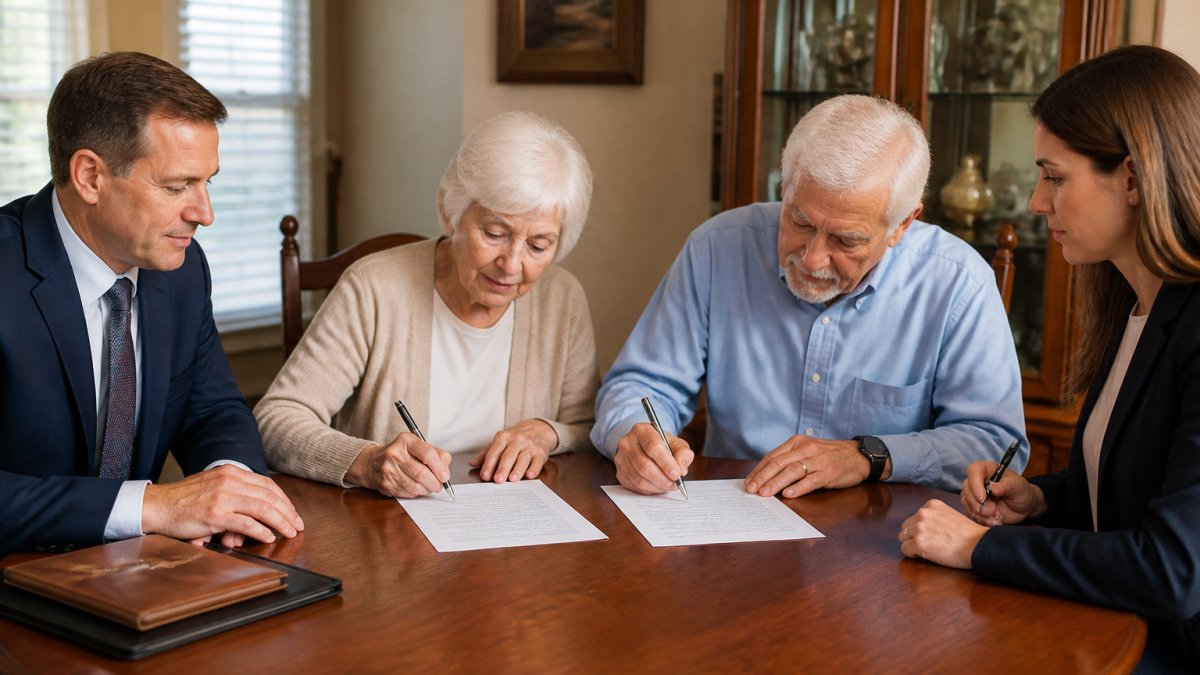
Here is the at-home signing sequence we walk clients through. Follow it in order, and keep the same people in the same room from start to finish.
- Clear the room. Limit it to the testator, the required witnesses, and the notary. Close the door, silence phones, and put away other paperwork so no one signs the wrong page.
- Lay out the full will. Confirm every page is present, in order, and that the will is unsigned. If a page is missing or the document is already signed, stop and reschedule.
- Confirm identity. The notary checks a current government-issued photo ID for the testator. Have IDs ready for the witnesses too, since some notaries log witness identification.
- Confirm willingness and capacity. The testator states aloud that the document is their will, that they have read it, and that they are signing freely. The notary is listening for awareness and voluntariness, not legal advice.
- Testator signs. The testator signs every page the will requires, in front of all witnesses and the notary. No one signs ahead of time and no one signs in another room.
- Witnesses sign. Each witness signs where the will directs, prints their name and address if the form calls for it, and does so in the presence of the testator and each other.
- Complete the self-proving affidavit, if used. The testator and witnesses sign the affidavit before the notary in the same sitting. This is a separate signature block from the will itself.
- Notary completes the certificate. The notary fills in the acknowledgment or jurat, signs, dates, and applies the seal or stamp. The notary is notarizing signatures on the certificate or affidavit, not the will's contents.
- Review and pack. Flip through every page once more, confirm no blank signature lines remain, and place the original in an envelope. Do not mail the only original.
Who must be physically present, and when
| Moment | Testator | Witnesses | Notary |
|---|---|---|---|
| Identity check | Present | Present | Present |
| Testator signs will | Present | Present | Present |
| Witnesses sign will | Present | Present | Present |
| Affidavit signatures | Present | Present | Present |
| Notary certificate and seal | Present | Present | Present |
A simple rule covers most state rules: everyone stays in the room for the entire ceremony. If the testator signs, then a witness signs later at the kitchen table alone, you have created a fact pattern that can be challenged in probate.
Adding a Self-Proving Affidavit for a Will
A self-proving affidavit is a sworn statement, signed by the testator and witnesses before a notary, that confirms the will's execution. It is usually attached to the will and becomes part of the probate file.
What the affidavit actually says
Most state forms track a common structure. The testator swears that they signed the will willingly, that they were of sound mind, and that the witnesses were present.
Notarizing the will vs. notarizing the affidavit
This is where home signings go wrong. In most states, the notary is not notarizing the will itself.
What to do if your will has no notary block
Many will templates, especially older ones, have a witness attestation but no self-proving affidavit page. You have three options:
- Use a state-specific affidavit form and attach it to the will, following the state's required wording.
- Execute the will with witnesses only, if your state does not require notarization for validity, and accept that witnesses may need to be located at probate.
- Have an attorney prepare a codicil or a new will with the correct affidavit language if the existing document is close to signing day.
Do not hand-write a notary block onto a will. A mismatched certificate can create more problems than it solves.
How to create and execute one at home
- Get the affidavit form your state accepts, from a state court self-help page, a reputable legal form publisher, or your estate attorney.
- Print the affidavit and attach it to the will, or print it as the final page if your state's form is designed that way.
- Have the testator and witnesses sign it in the notary's presence, in the same sitting as the will signing.
- Let the notary complete the jurat, sign, date, and seal.
- Store the affidavit with the original will, not in a separate file.
Booking a Mobile Notary for Wills at Your Home
A mobile notary for wills brings the signing ceremony to your table, which helps when the testator is elderly, ill, or homebound. That's exactly what we do at David Booth Mobile Notary, with 24/7 service across Tennessee and Virginia.
Before you book, know what to ask:
- Are you NNA certified and background checked?
- Do you carry a bond and insurance?
- Can you travel to my county or facility?
- What identification should I have ready?
Our team is a member of the National Notary Association, background checked, and bonded and insured. We also serve care facilities and rural counties, not just the cities. If you're deciding whether the convenience is worth it, read is hiring a mobile notary worth the extra cost. Ready to schedule? Learn how to find a mobile notary for estate documents.
Common Mistakes That Sink a Home Will Signing
The biggest mistake is treating notarization as the whole job. It isn't. Here's what goes wrong most often:
- Skipping witnesses because a notary was present
- Letting a beneficiary witness the will in states that forbid it
- Signing separately instead of in one another's presence
- Using an expired ID and stalling the appointment
- Missing pages in the printed will
Another trap: assuming remote online notarization works for wills. Many states restrict or prohibit remote notarization for wills, so confirm your state's position before relying on it. A little prep prevents a redo. Our guide on things to know before booking a notary in Hendersonville TN walks through the pre-booking checklist.
Schedule Your In-Home Will Signing
Getting a will signed correctly takes planning, the right witnesses, and a notary who knows the process. One missed signature means starting over. We bring the notary to your home, care facility, or office, any hour of the day, across Tennessee and Virginia. Our team is NNA certified, bonded and insured, and experienced with elderly clients who need extra time and patience. Get started with David Booth Mobile Notary and sign your will with confidence, at your own table.
Frequently Asked Questions
Does notarizing a will make it legally valid?
Not by itself. A notary seal does not replace the signing and witness requirements your state sets for a valid will. Notarization usually supports a self-proving affidavit, which speeds up probate by confirming the signatures without calling witnesses to court. LegalShield notes rules vary by state, and the National Notary Association advises following authoritative legal instructions and supplying the notary with the required certificate. Confirm your state's execution rules with an estate-planning attorney before signing.
Can a mobile notary come to your home to notarize a will?
Yes. A mobile notary for wills travels to your home, care facility, or hospital room and performs the notarial act there. Have your government-issued identification, the complete document, and any required witnesses ready before the appointment. Confirm in advance whether your state requires witnesses to be present for the notarization itself, since the notary's role is limited to verifying identity and administering the acknowledgment or jurat.
Do witnesses need to be present when a will is signed?
In most states, yes. Will witnesses and notarization serve different purposes: witnesses confirm the testator signed willingly and appeared to have capacity, while the notary verifies identity and completes the notarial certificate. Many states require two witnesses, and some restrict who can serve, such as excluding beneficiaries. Because the number and eligibility rules differ by state, check your state's requirements and have all signers present at the same signing ceremony.
Can you notarize a will online?
It depends on the state. Remote online notarization is authorized in some states but not others, and even where it is allowed, will signing and witness rules may still require an in-person ceremony. Verify with the state's official source or an attorney. When in doubt, an in-person mobile notary removes the uncertainty.