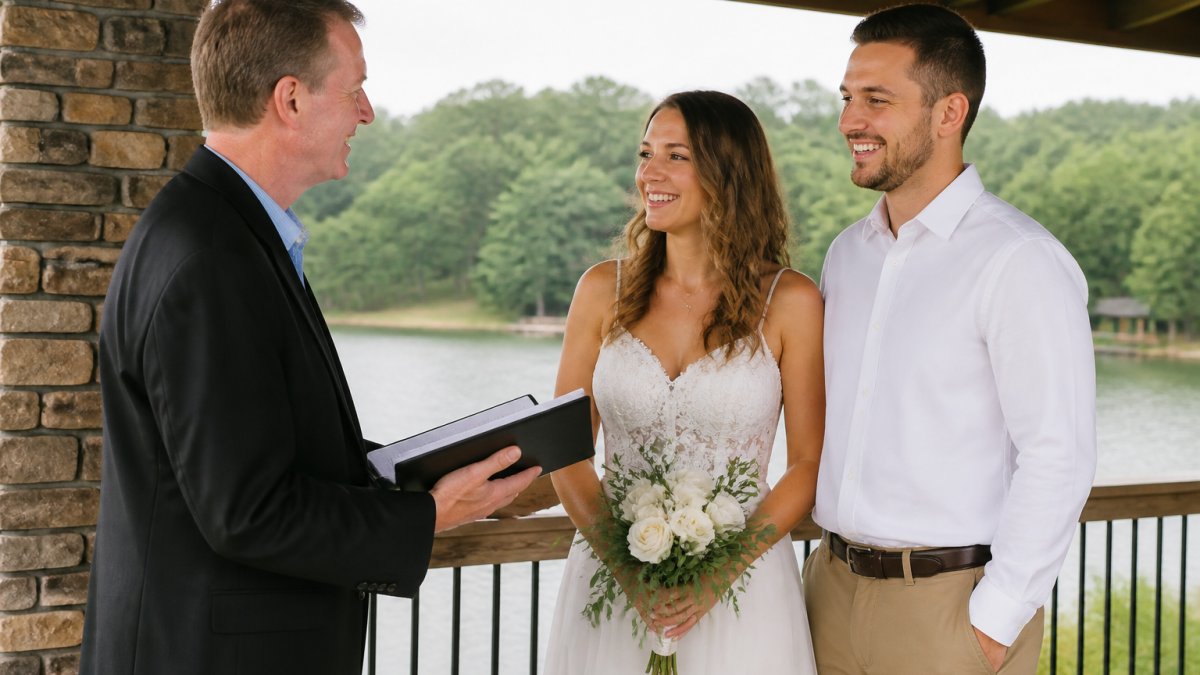
 listicle
Best Low-Cost Wedding Services for Last-Minute Weddings
Table of Contents
- What to Look For in Low-Cost Wedding Services for Last-Minute Weddings
- Service Packages and Pricing: What Drives the Final Cost
- How to Choose a Wedding Officiant for an Elopement
- How to Write a Personalized Wedding Ceremony Script
- Legal Marriage Requirements in Tennessee and Virginia
- A Practical Last-Minute Wedding Planning Timeline
- Frequently Asked Questions
Last Updated: October 9, 2026
What to Look For in Low-Cost Wedding Services for Last-Minute Weddings
Low-cost wedding services for last-minute weddings are officiant-led ceremony packages that can be booked, scripted, and performed within days rather than months. At David Booth Mobile Notary, we bring private ceremonies directly to couples across Tennessee and Virginia.
The biggest mistake couples make is shopping on price alone. A cheap ceremony that leaves you scrambling for a witness, a license, or a location costs more in stress than the money it saves. Start with three questions: Who is legally able to officiate here? What is the all-in price? How fast can they confirm a date?
How to Verify Availability and Credentials Before You Book
Verification is the step most couples skip, and it is the one that protects your marriage license from being rejected. Before you pay a deposit, confirm two things: the officiant's legal standing to perform marriages in your state, and a written commitment to your date and time.
Ask for these four items in writing:
- Proof of ordination or legal authorization to solemnize marriages in the state where you will marry
- A signed booking confirmation with date, time, and location
- The full itemized price, including any travel or after-hours fee
- A backup plan if the officiant has an emergency
A common mistake is accepting a verbal "we're available" over the phone. Get it in writing. If a provider cannot produce documentation, move on, no matter how low the price.
Service Packages and Pricing: What Drives the Final Cost
Most low-cost wedding services price in tiers, and the spread between the cheapest and most complete package usually comes down to a handful of variables. Knowing them helps you compare quotes honestly instead of comparing headline numbers that hide different inclusions.
| Cost Factor | What It Covers | How It Changes Your Price |
|---|---|---|
| Service level | Sign-and-go vs. full-length ceremony | More ceremony time raises the fee |
| Location | Chapel, home, park, or remote site | Travel distance adds to the total |
| Timing | Weekday vs. weekend, daytime vs. after-hours | Peak and late hours cost more |
| Add-ons | Vows assistance, script writing, witnesses | Each extra service adds cost |
| Filing | Returning the signed license to the clerk | Some providers charge for this; some include it |
A sign-and-go ceremony is the fastest and leanest option: you sign, the officiant witnesses, and you are married. A full-length ceremony includes a personalized script, vows, and a short processional, which takes longer and usually costs more. Neither is better; they serve different needs.
The Line Items That Blow Up a "Low-Cost" Quote
The advertised price is rarely the final price. When you request a quote, ask the provider to break it into these line items so you can compare two offers apples to apples:
- Base ceremony fee, the officiant's time and the ceremony itself.
- Travel or mileage charge, common once the site is outside a set radius; ask for the radius and the per-mile rate.
- After-hours or holiday surcharge, evenings, weekends, and holidays often carry a premium.
- Witness fee, if the provider supplies witnesses, expect a per-witness charge.
- Script or vows assistance, custom writing or editing is frequently a separate add-on.
- License filing or courier fee, some officiants return the signed license to the clerk for you; others do not.
- Rush or same-day booking fee, a premium for turnaround inside 24-48 hours.
- Deposit and cancellation terms, how much is due up front, and what is refundable if you reschedule.
How to Read a Package Tier
A three-tier structure is the most common pattern. A bare-bones tier typically covers the officiant, a short ceremony, and the signature. A mid tier adds a personalized script and vow guidance. A top tier adds rehearsal, extended ceremony time, and sometimes filing.
For couples tracking a strict budget, a free planning tool like The Knot's wedding cost guide can help you see how ceremony costs fit into your overall spending. Note that published averages reflect full weddings, not the stripped-down ceremonies most last-minute couples book, so treat them as a ceiling rather than a target.
How to Choose a Wedding Officiant for an Elopement
Choosing a wedding officiant for an elopement comes down to three things: legal authority, availability on your date, and a personality that fits the tone you want. An elopement is intimate, so the officiant is often the only other person in the room.
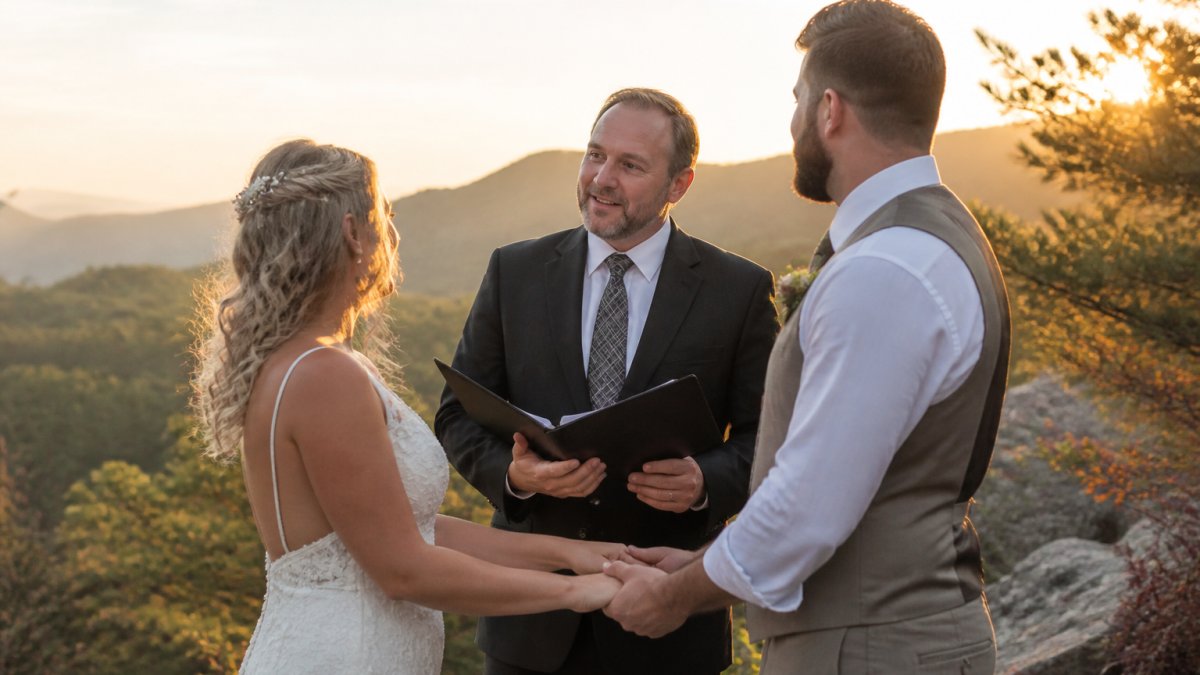
Here is how we would screen candidates:
- Confirm the officiant is legally authorized in the state where the ceremony happens
- Ask how many elopements they have performed and whether they handle last-minute bookings
- Request a short call to hear how they speak and whether they match your tone
- Get the backup plan in writing
What most guides miss is that a warm, unhurried officiant matters more for a nervous couple than a long résumé. If you are coming from a courthouse appointment, expect a private ceremony to feel more personal and less rushed.
How to Write a Personalized Wedding Ceremony Script
A personalized wedding ceremony script is a short, structured set of words that reflects your story and fits your chosen service level. You do not need to be a writer. A simple four-part structure works for almost any elopement.
- Welcome: Two or three sentences greeting guests and setting the tone.
- Your story: A short paragraph on how you met and what you are promising.
- Vows: The promises you make to each other, in your own words.
- Declaration: The formal "I now pronounce you" moment, handled by the officiant.
Keep the whole script to a few minutes for a sign-and-go ceremony, and longer for a full-length one. Read it aloud once before the day; sentences that look fine on paper sometimes trip the tongue.
Legal Marriage Requirements in Tennessee and Virginia
Marriage requirements differ by state, so confirm the rules for the state where you will actually marry. In both Tennessee and Virginia, you apply for a marriage license through the local clerk's office before the ceremony, and the license is only valid for a set window, so timing matters. The license must come from the state where the ceremony takes place, a license from one state does not authorize a ceremony in another.
The Mechanics That Trip Up Last-Minute Couples
Four details cause most of the last-minute problems:
- Where to apply. In Tennessee, you apply at the county clerk in the county where you will marry. In Virginia, you apply at the circuit court clerk in the county or city where you will marry. Both accept applications in person, and some offices allow an appointment to skip the line.
- Waiting period. Some localities impose a waiting period between applying and the ceremony; others do not. Tennessee has historically had a short waiting period that can be waived in certain circumstances, and Virginia has historically had no waiting period. Because these rules change, verify the current requirement with the clerk before you set your date.
- Witnesses. Many states require one or two witnesses to sign the license. Confirm the number for your state and line them up early, a missing witness can stall the ceremony.
- Who files the license. After the ceremony, the signed license must be returned to the issuing clerk's office within a set window. Some officiants handle this; some leave it to you. Ask before the ceremony, not after.
Identification and Eligibility
Bring government-issued photo identification for both parties. Some offices require a birth certificate or proof of prior marriage dissolution if you have been married before. If either party is under the standard age of majority, additional consent rules may apply. Because these requirements vary by office, call the clerk where you will apply and ask for the current checklist rather than relying on a general guide.
Because license fees, waiting periods, and validity windows change, verify current details with the Tennessee Secretary of State and the Virginia Department of Health before your appointment. Do not rely on a blog, including this one, for the exact figures.
If you are planning a ceremony across state lines, confirm both states' rules, since the license must come from the state where the ceremony takes place. A common pattern is for couples to apply in the state where they will hold the ceremony and then discover the officiant is only authorized in a neighboring state, verify the officiant's authorization in the ceremony state, not the state where they are based.
A Practical Last-Minute Wedding Planning Timeline
A last-minute wedding is manageable if you work backward from your date. Most couples can complete the essentials in a few days when they sequence the steps correctly.
| When | Task | Why It Matters |
|---|---|---|
| 5-7 days out | Apply for the marriage license | Waiting periods and clerk hours vary |
| 3-5 days out | Book your officiant and confirm in writing | Locks your date and price |
| 2-3 days out | Finalize the ceremony script and vows | Removes day-of stress |
| 1 day out | Confirm location, time, and witnesses | Prevents no-shows |
| Day of | Bring the license and required ID | The officiant cannot proceed without it |
The one step couples forget is confirming witnesses. Many states require one or two witnesses to sign the license, so line them up early.
Choosing a low-cost wedding service on a short timeline is a challenge, but it is far from impossible when you verify credentials, confirm the total price in writing, and sequence your steps correctly. David Booth Mobile Notary offers 24/7 mobile officiant services across Tennessee and Virginia, a private wedding chapel in Gate City, Virginia, and emergency availability for couples who cannot wait.
Frequently Asked Questions
What is the average cost of a simple wedding?
A simple wedding with an officiant, basic ceremony, and minimal decor typically costs far less than a traditional event. The final price depends on your location, guest count, and whether you add extras like photography or a venue. Low-cost wedding services often bundle officiant duties with ceremony coordination. Request an itemized quote from any provider so you can see exactly what is included before you commit.
How do I find a licensed wedding officiant for a last-minute elopement?
Start by searching for mobile officiants who serve your county and offer same-day or next-day availability. Verify their credentials, ask whether they are bonded and insured, and confirm they have performed ceremonies in your state. A wedding officiant for elopement services should be able to explain the marriage license process and what they need from you. Call ahead to confirm they can reach your chosen location on your date.
What are the legal requirements for a marriage license in Tennessee and Virginia?
Both states require a valid marriage license before the ceremony. In Tennessee, you apply through the county clerk where the ceremony will take place; some counties waive the waiting period for out-of-state residents. Virginia requires a license from any circuit court clerk, valid for 60 days. Specific fees and documentation vary by county, so confirm current requirements directly with the clerk's office before your ceremony date.
Can I hire a mobile notary to perform my wedding ceremony?
Some mobile notaries are also commissioned as wedding officiants and can perform your ceremony. David Booth Mobile Notary, for example, provides both 24/7 mobile notary and wedding officiant services throughout Tennessee and Virginia. If you need a notary for legal documents and a separate officiant for your ceremony, you can often book both through the same provider, which reduces coordination and cost.
What documents do I need to provide to a wedding officiant?
You will need your valid government-issued photo ID and your marriage license from the appropriate county or circuit court. Some officiants also ask for a completed ceremony worksheet or vows copy in advance. Bring the license to the ceremony so the officiant can sign and file it correctly. Check with your specific provider about any additional paperwork they require before the date.