 listicle
Benefits of 24/7 Mobile Notary Services: What to Expect
Last Updated: October 23, 2026
Quick Summary
The benefits of 24/7 mobile notary services are convenience, flexible scheduling, time savings, accessibility, and urgent same-day notarization. A mobile notary travels to homes, offices, hospitals, and care facilities day or night, so signers avoid travel, parking, and waiting lines. Evening, weekend, and last-minute appointments happen on the signer's timeline.
- The global mobile notary public market is projected to grow from USD 0.6 billion in 2026 to USD 3.1 billion by 2036.
- True 24/7 availability means someone answers at 11 p.m. on a Saturday and can dispatch a traveling notary.
- Confirm the room number and visiting policy when booking a hospital or care facility appointment.
- Never sign a document before the notary arrives, or it usually has to be redone for a second fee.
- Mobile notary bills typically break into the state-capped notarial act fee, a travel fee, and a convenience or after-hours fee.
Table of Contents
- Why 24/7 Mobile Notary Services Matter When Timing Is Tight
- 1. Convenience: A Notary Who Comes to Your Client Location
- 2. Flexible Scheduling for Evening and Weekend Appointments
- 3. Time Savings and Reduced Disruption for Signers
- 4. Accessibility for People With Mobility Issues
- 5. Urgent and Last-Minute Notarization Without the Waiting Lines
- What a Mobile Notary Appointment Actually Looks Like
- Mobile Notary Fees: What Drives the Total Cost
- Frequently Asked Questions
Why 24/7 Mobile Notary Services Matter When Timing Is Tight
According to Future Market Insights' mobile notary public market forecast, the global mobile notary public market is projected to grow from USD 0.6 billion in 2026 to USD 3.1 billion by 2036, a 17.9% compound annual growth rate. That growth tracks a simple reality: documents do not wait for business hours. Closings, powers of attorney, and estate paperwork arrive on their own schedule, and the benefits of 24/7 mobile notary services come down to one thing, a notary public who shows up when the deadline does.
At David Booth Mobile Notary, we bring notarization to homes, offices, hospitals, and care facilities across Tennessee and Virginia, day or night. Below, we break down what round-the-clock service actually delivers and how to prepare so the appointment takes minutes instead of hours.
1. Convenience: A Notary Who Comes to Your Client Location
The core benefit is simple: the notary travels to you. A mobile notary is a commissioned notary public who performs notarial acts at a signer's chosen location rather than a fixed office. That means a home visit, an office visit, a hospital visit, or a meeting at a title company conference room, all without the signer leaving the building.
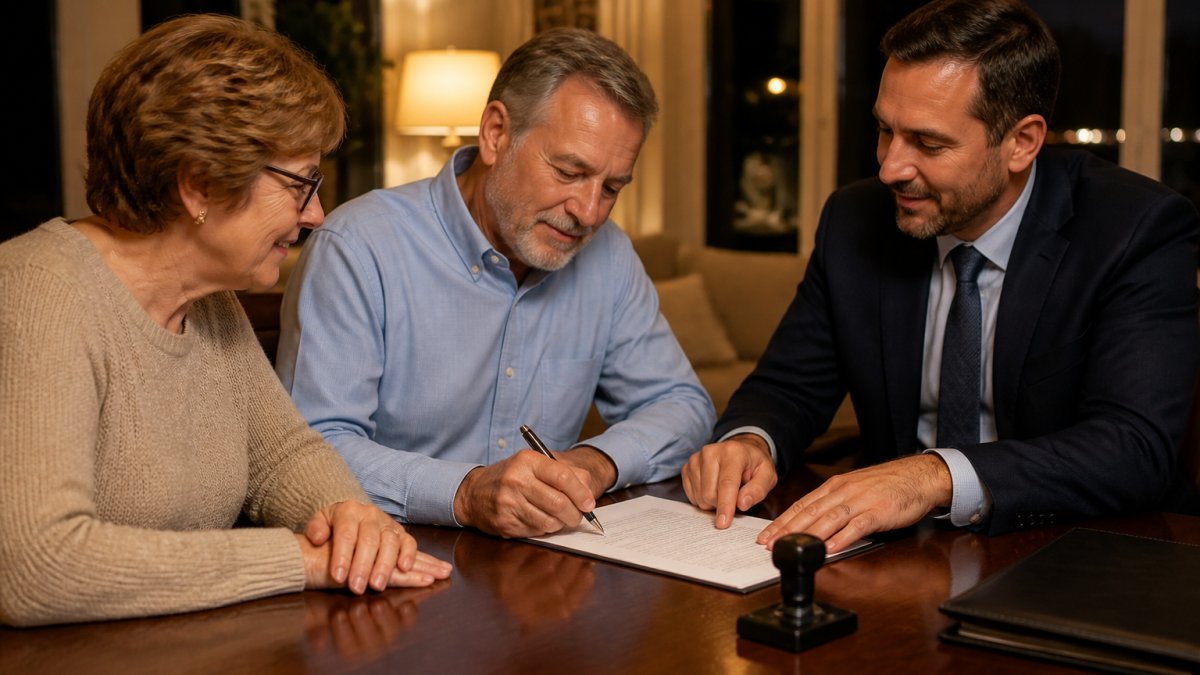
For real estate agents and attorneys, this removes a logistical headache. Loan documents and closing packages get signed where the client already is, which keeps the transaction moving and cuts down on no-shows. For families finalizing a will or trust, it means a private, unhurried signing at the kitchen table instead of a crowded waiting room.
2. Flexible Scheduling for Evening and Weekend Appointments
Flexible scheduling is where mobile service separates itself from the bank branch down the street. Evening appointments and weekend appointments let a signer handle paperwork after work or on a Saturday, without burning a vacation day.
True 24/7 availability means more than a late closing time. It means someone answers at 11 p.m. on a Saturday and can dispatch a traveling notary to a time-sensitive closing. That distinction matters, because "open late" and "available around the clock" are not the same promise, and only one of them helps when a deadline lands outside normal hours.
3. Time Savings and Reduced Disruption for Signers
Count the real cost of the traditional notary office: travel time, traffic, parking, and waiting lines. A single errand can eat two hours, and that is before a document gets reviewed.
On-site service collapses that into one appointment at a known time. Business owners avoid pulling staff off the floor. Attorneys avoid rescheduling client meetings. Signers avoid the second trip that happens when a document is missing a signature or the identification is wrong. Process efficiency improves because the notarization happens inside the workflow instead of interrupting it.
4. Accessibility for People With Mobility Issues
For elderly signers and patients in care facilities, accessibility is not a nice-to-have. Mobility issues, recovery from surgery, or a hospital stay can make a trip to a notary office impractical or impossible. A bedside notarization solves that.
We regularly serve signers in assisted care facilities and hospitals who need extra time and patience during a signing. A mobile appointment lets the signer stay seated, keep their documents nearby, and move at their own pace. That is personalized, one-on-one service in the truest sense.
5. Urgent and Last-Minute Notarization Without the Waiting Lines
Urgent notarization is the reason most people search for a mobile notary in the first place. A closing moved up, a power of attorney needed before a procedure, a document that has to be signed tonight. On-demand service means the appointment happens on the signer's timeline.
The National Notary Association's guidance on notary fees notes that mobile notaries may charge up to the maximum fee set by state law, so an emergency call can carry a higher total than a standard appointment. Ask about after-hours pricing when you book, not after the signing.
| Situation | Best Fit | Why |
|---|---|---|
| Closing rescheduled to tonight | 24/7 mobile notary | Travels to the signer after hours |
| Signer in a care facility | Mobile notary, daytime | Bedside service, extra time allowed |
| Routine document, flexible week | Traditional notary office | Lowest base cost |
| Signer out of state | Remote online notarization | No travel required |
What a Mobile Notary Appointment Actually Looks Like
A mobile notary appointment has two phases: booking and preparation, then the signing itself. Knowing both keeps the visit short.
Before the Appointment: Booking and Preparation
When you book, have the document type, the signer's location, and the deadline ready. Confirm the signer will be present and has valid, unexpired photo identification. Gather any required witnesses, since witness rules vary by document and state.
- Confirm the appointment time and full address, including unit or room number
- Verify the signer's ID is current and the name matches the document
- Check whether witnesses are required and who will supply them
- Review the document for blank fields that must be completed before signing
- Ask about the total fee, including any travel or after-hours charge
At the Signing: Identity Verification and the Notarial Act
The notary verifies identity, confirms the signer is signing willingly, administers any required oath or affirmation, and completes the notarial act with a signature and seal. The notary does not draft documents or give legal advice, and cannot notarize a document the notary has a financial interest in.
Mobile Notary Fees: What Drives the Total Cost
Mobile notary fees are not one number. State law caps the fee for the notarial act itself, while travel, after-hours timing, and the number of signers or documents affect the rest.
The Three Components of a Mobile Notary Bill
Most quotes break into three parts, and knowing them makes it easier to compare providers:
- The notarial act fee. This is the state-capped amount for each signature, oath, or acknowledgment. The cap varies by state, and a notary cannot legally charge more for the act itself.
- Travel fee. A per-mile or flat-zone charge that reflects the notary's drive to and from the signing location. Longer rural routes and after-dark drives cost more.
- Convenience or after-hours fee. A separate charge for evening, weekend, holiday, or emergency dispatch. Some providers fold this into a single flat rate; others itemize it.
A quote that names all three is easier to trust than one that gives a single number with no breakdown. Ask which components are included and which are added at the door.
What Can Push the Total Higher
Several factors commonly raise the final bill, and they are worth confirming when you book:
- Multiple signers or documents. Each additional signer or notarized document usually adds to the act fee and to the time on site.
- Witness requirements. If the document requires witnesses and the signer cannot supply them, some providers charge for witness coordination or travel.
- Location access. Gated communities, hospitals with visitor restrictions, and facilities that require check-in add time and sometimes a coordination charge.
- Holiday and overnight calls. These often carry the highest premium because they pull a notary away from other work or from sleep.
What a Mobile Notary Cannot Charge For
A notary cannot charge for legal advice, cannot draft documents, and cannot notarize a document in which the notary has a financial interest. If a provider offers to prepare or review the document for an extra fee, that is a sign to ask whether the person is also an attorney, because notarial and legal services are separate under state law.
We do not publish a flat rate because every appointment differs. Call us with the document type, location, and time, and we will quote the total up front so there are no surprises. For a broader look at how mobile and traditional notary services compare, the National Notary Association's notary resources is a solid reference on commissioning and standards.
Frequently Asked Questions
What are the benefits of using a 24/7 mobile notary?
A 24/7 mobile notary brings the notarial act to your home, office, hospital room, or care facility at any hour, so you avoid travel time, traffic, and waiting lines at a traditional notary office. Evening and weekend appointments help busy professionals and families finalize legal documents without taking time off work. For signers with mobility issues, the notary comes to the bedside. Urgent and last-minute notarization becomes possible when a closing or filing deadline falls outside normal business hours. The main trade-off is that mobile notary fees can run higher than a standard appointment because travel and after-hours service are involved.
How does a mobile notary appointment work?
You book a mobile notary appointment by phone or online, sharing the document type, signing location, and preferred time. The notary confirms the appointment and tells you what to have ready: valid identification, the complete document, and any required witnesses. At the signing, the notary verifies each signer's identity, watches the signature, and completes the notarial certificate with a seal. The notary does not draft or review the document's legal content. Many providers serve homes, offices, hospitals, and jails, and some offer round-the-clock service for urgent signings.
Does a mobile notary charge extra for travel or after-hours appointments?
The National Notary Association notes that mobile notaries may charge up to the maximum fee set by state law, and state rules on notarial fees differ. Ask for a written quote before booking that separates the notarial fee from travel and any after-hours charge. Call to confirm current rates for your location and time.
What documents can a mobile notary notarize?
Documents a mobile notary can notarize include affidavits, powers of attorney, real estate and loan documents, wills and trusts (though some states have specific witness rules), consent forms, and many business contracts. A notary verifies identity and witnesses signatures; the notary cannot give legal advice or confirm that a document is legally valid. Bring the complete document, unsigned, plus valid photo identification. If witnesses are required, ask the notary in advance whether they can provide them or whether you need to arrange your own.
Timing is the one part of a signing you cannot control, but the logistics are. When a document needs a notary tonight, David Booth Mobile Notary brings NNA-certified, bonded, and insured service to your door, with 24/7 availability, emergency service, and coverage across all Tennessee and Virginia counties. Call now to book an appointment and get your documents signed, sealed, and finished on your schedule.